So I Ended Up in a U.S. Federal Counterclaim...
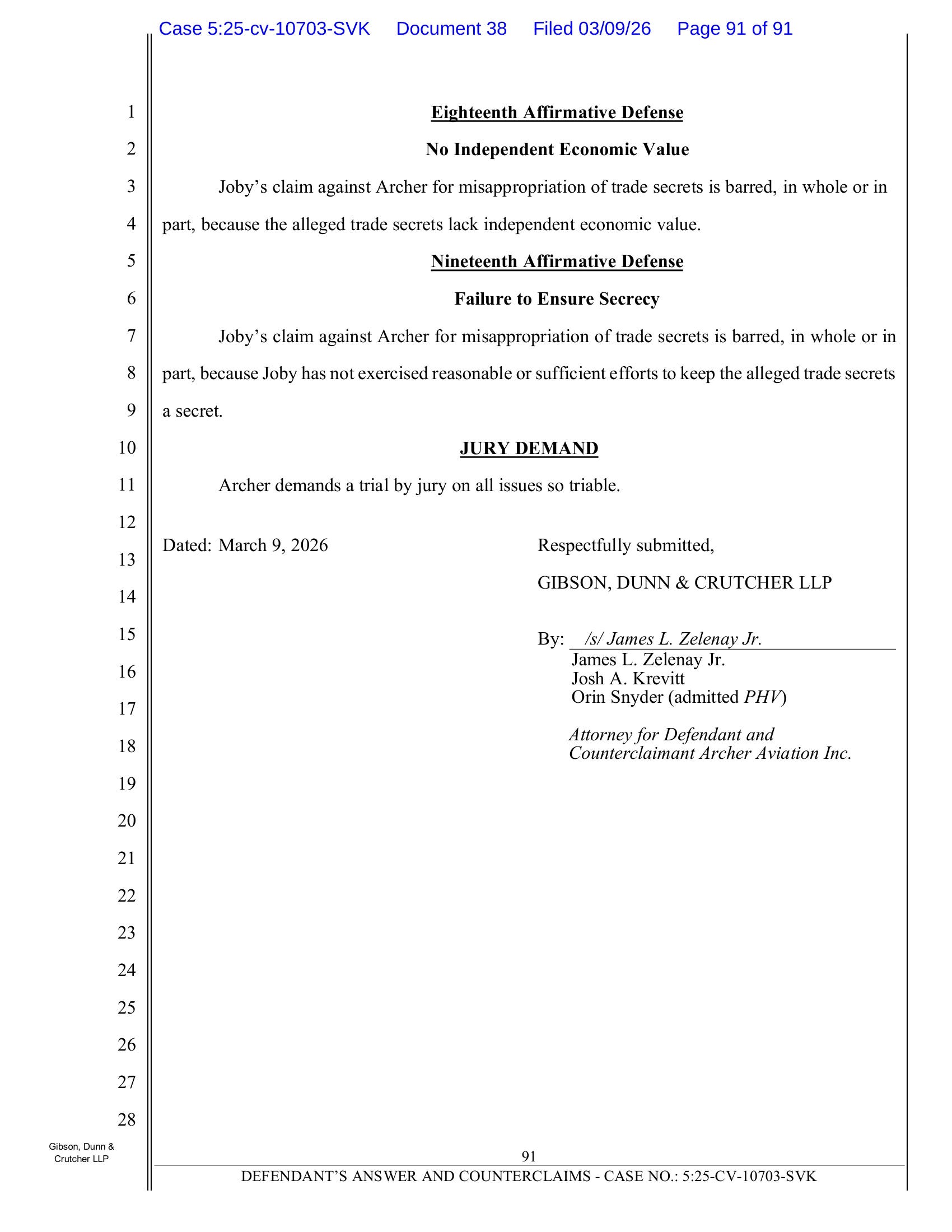
A full copy of Archer’s counterclaim is included.

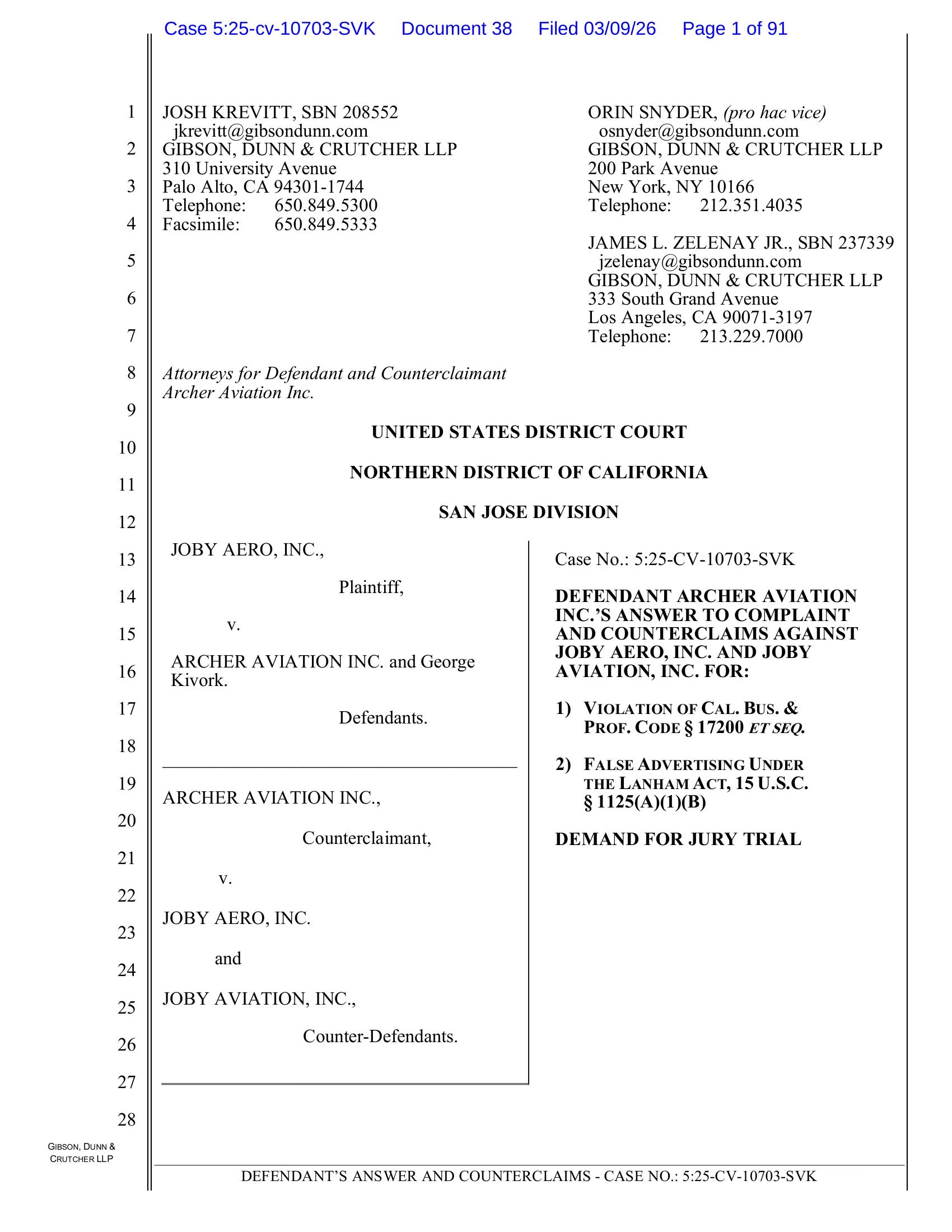
Just got a hold of the Archer counterclaim (Case 5:25-CV-10703) — I have been kicking myself for having to rely on other aviation reports because I couldn’t properly access Public Access to Court Electronic Records (PACER).
Admittedly, I thought the next time I would talk about this was to share my snazzy Joby socks — which, as of yesterday, were coming free with any order at Joby’s new merch store.
It was a toss-up between the sweatshirt and t-shirt.
I got both.
(Update: the free sock promo appears to be gone now).
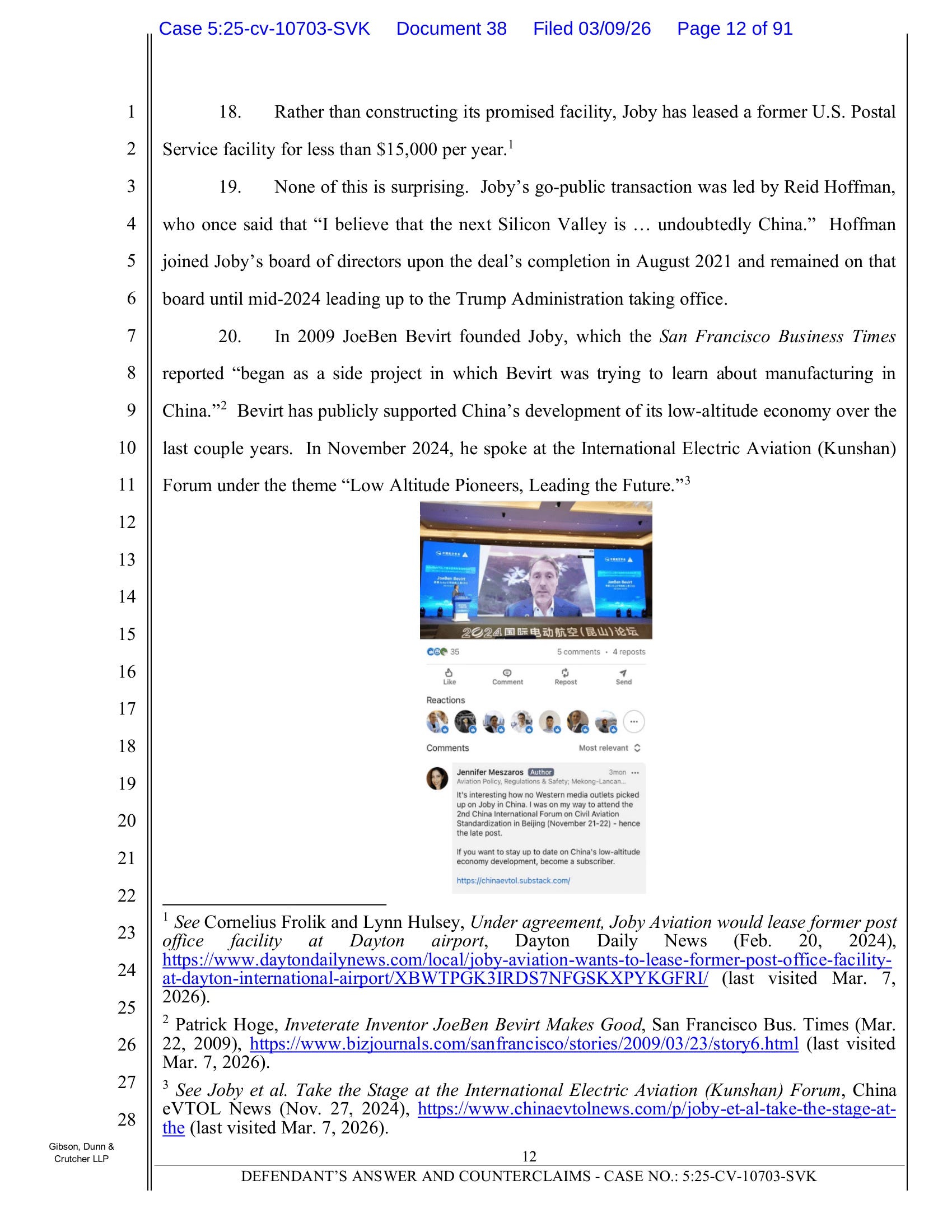
So yes, I was surprised — and mildly amused — when I saw Archer had screenshot a comment of mine and included it in their counterclaim.
For those who don’t know me — I have been covering aviation since 2013, namely focusing on Asia-Pacific, and I am a big advocate for more news spotlight on the region. I also serve as an aviation consultant, supporting civil aviation authorities and the private sector .
My areas of focus include advancing safety initiatives and harmonization of regulations, legislation, and standards. I also provide various writing, researching, and market entry services.
Lately, I have been the pilot-in-command of China eVTOL News, which I launched to raise awareness of China’s emerging low-altitude economy. I am a big advocate for countering disinformation; I keep receipts.
Given the attention this case is getting, I wanted to share some context that seems to be missing from the conversation. Because if you look at what’s actually happening on the ground, a clear picture emerges — aviation is inherently global.
Western/international engagement with China’s aviation sector is fairly routine—even if it isn’t widely reported.
(It’s also inherently political when we’re talking about multi-million- or billion-dollar orders, aircraft certification, Bilateral Aviation Safety Agreements, and market access, to name a few).

As I mentioned to Zag Daily (before I knew that my LinkedIn post was mentioned in Archer’s countersuit) —
“No U.S. law broadly prohibits American companies from maintaining subsidiaries in China or those subsidiaries from receiving ordinary local business incentives. U.S. and other foreign firms operating in China may establish locally registered subsidiaries that are eligible for the same economic development programmes available to any locally registered company.”
Below are a few Sino-international cooperation examples.
Royal Aeronautical Society (RAeS) — On March 12, announced new Fellows for the China region, including senior leaders from Honeywell and Thales. The Fellowship (FRAeS) is the highest grade in one of the world’s oldest aerospace professional societies, and is recognized by the Shanghai government as equivalent to an associate senior professional title.
Speaking of RAeS and training — On February 3, the Royal Aeronautical Society China (Shanghai) Office signed an agreement with Pudong New District to establish an International Aviation Maintenance and Manufacturing Industry-Training Integration Practical Training Center, adopting the UK Modern Apprenticeship system.
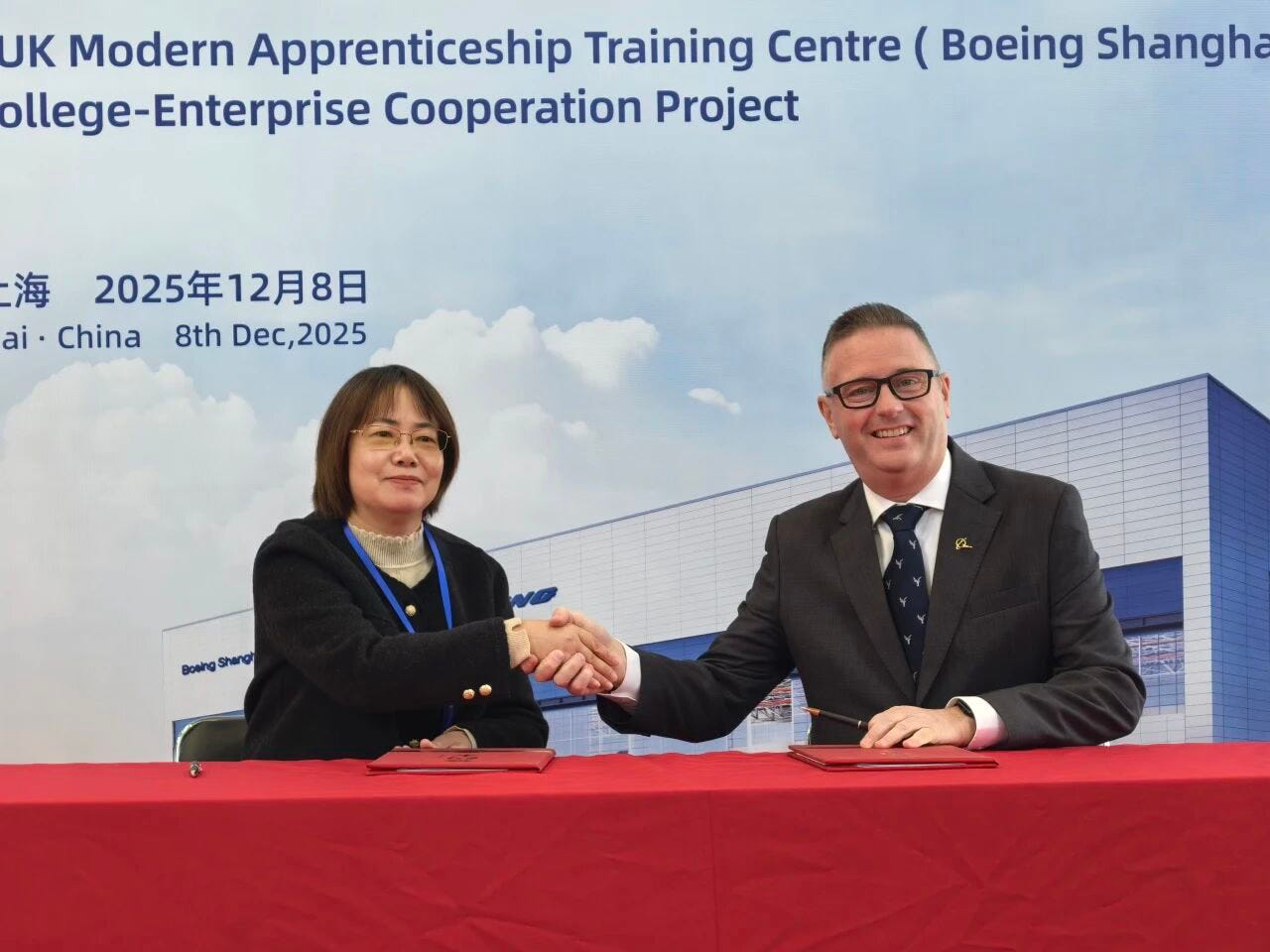
That initiative builds on a program launched in December 2025 — China’s first UK-style aviation manufacturing and maintenance apprenticeship program, jointly established by Shanghai Civil Aviation College and Shanghai Boeing Aviation Modification and Maintenance Engineering Co., Ltd. , with a training base at the Shanghai Boeing facility.
Speaking of Boeing — According to Reuters, the company is reportedly finalizing a deal for up to 500 737 MAX jets with Chinese airlines, plus another 100 wide-body aircraft (787 Dreamliners and 777Xs), expected to be announced during President Trump's visit to Beijing later this month (March 31–April 2). If finalized, this would be the largest Boeing order from China in nearly a decade.
Boeing operates the Zhoushan Completion Center, a joint venture with COMAC, where hundreds of workers install interiors and paint liveries for 737s destined for Chinese carriers. That facility has been operational since 2018.
And then there’s Aviage Systems — A joint venture between GE Aerospace and AVIC (Aviation Industry Corporation of China), established in 2012 and headquartered in Shanghai. Aviage develops integrated avionics systems for Chinese commercial aircraft programs, including the COMAC C919 and ARJ21.
The company supplies the core avionics platform for the C919 — the same aircraft touted in Western media as competing with Boeing and Airbus in the narrow-body segment.
And then there's Bell Textron — The American helicopter manufacturer maintains a presence in China through its subsidiary, Zhenjiang Bell Textron Aviation Services Co., Ltd., which operates at Dalu Airport in Jiangsu Province. The facility provides maintenance services for roughly 300 Bell helicopters operating across China.
And then there's Robinson Helicopter Company — While Robinson itself isn't building facilities in China, a local company, Hainan Shanyi Aircraft Engineering Co., Ltd., is building a facility at Baisha Yuanmen Airport in Hainan that it aims to make the largest maintenance center servicing Robinson aircraft in China.
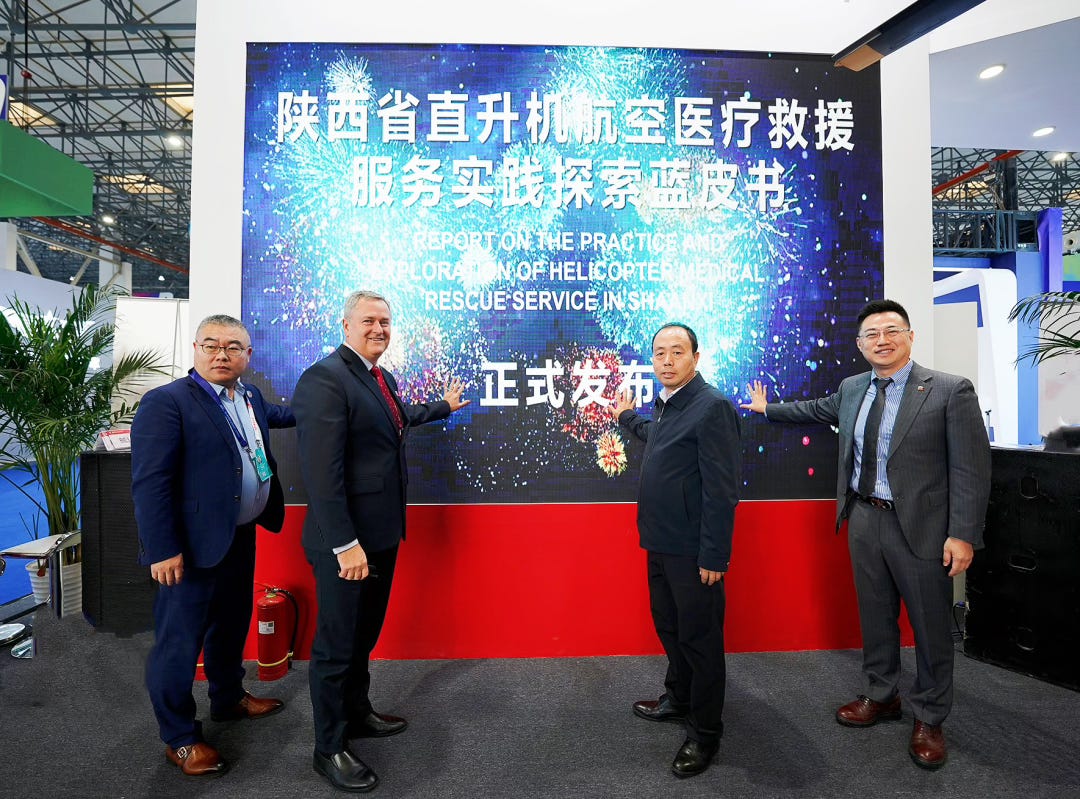
The above is just a handful of examples — and, as previously mentioned, Sino-foreign cooperation is not limited to aviation. We can see it across industries, including marine engineering, space exploration, oil and gas, pharmaceuticals, automotive manufacturing, semiconductors, and fundamental scientific research.
Global supply chains and cross-border partnerships are the norm rather than the exception.
I have included Archer’s counterclaim below. Apologies in advance — this platform doesn’t accept PDFs, so I have to upload via images. If you want a PDF, just message me.
Note — it’s 91 pages long.
Case No.: 5:25-CV-10703-SVK